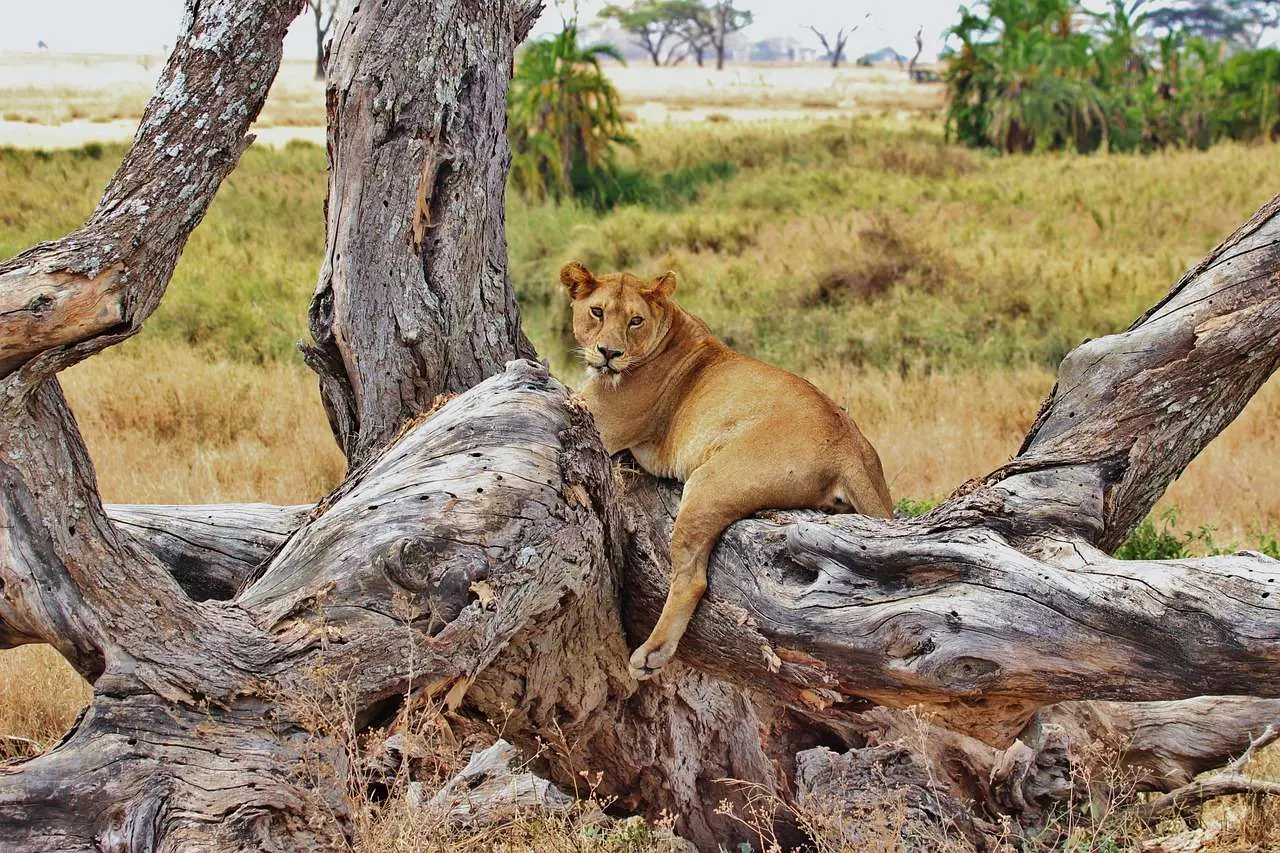
Wondering what a savanna habitat really is? It is warm tropical grassland dotted with trees, with a few wet months and a long dry spell. That rhythm shapes its plants, its fires and its animals, lions included.
The savanna is one landscape within the wider story of lion habitat.
| Item | Value |
|---|---|
| Distance from the Equator | 8° to 20° from the Equator |
| Share of Africa’s surface covered | Almost half |
| Savanna area in Africa | About five million square miles |
| Length of the rainy period | Six or eight months of the year |
| Typical annual rainfall | About 50.8 to 127 cm per year |
These figures come from the UC Museum of Paleontology grassland page and Britannica’s savanna entry. Figures can change as sources are revised, so check the sources before you rely on them.
Where the savanna habitat sits on the map
Savannas are a belt habitat of the tropics. Britannica says they generally grow 8° to 20° from the Equator, in places where it is warm to hot in every season.
The Ohio University physical geography text calls the savanna a transitional biome between those dominated by forests and those dominated by grasses. That is why its edges blur into woodland on one side and drier grassland on the other.
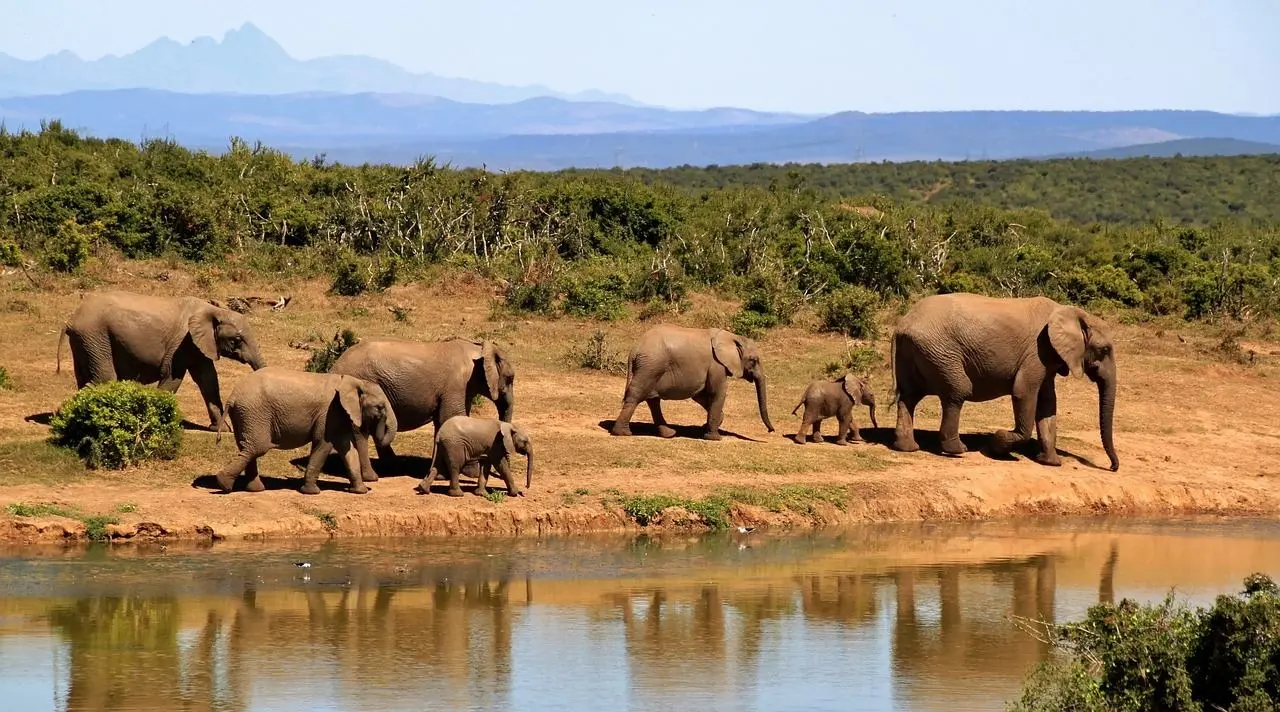
Africa holds the best-known examples, where savannas take up a very large share of the continent. Large areas of Australia, South America and India have them too, according to the UC Museum of Paleontology.
Climate: a few wet months and a long dry season
The defining feature is seasonality. The UC Museum of Paleontology notes that rainfall is concentrated in six or eight months of the year, followed by a long period of drought when fires can occur, with annual totals of about 50.8 to 127 cm, in its grassland overview.
Warmth is steady rather than extreme. The NCEAS Kids Do Ecology page gives a usual range of 68° to 86°F (20 to 30°C), with a wet summer of six to eight months and a dry winter of four to six months.
The timing of the rain depends on which side of the Equator you are on. Britannica places the significant rainfall at about October to March in the Southern Hemisphere and April to September in the Northern Hemisphere.
Spread the same rain evenly across the year and many of these areas would turn into tropical forest, as the UC Museum of Paleontology explains. If forests are what you are curious about, the guide on do lions live in the jungle is a natural next read.
A year on the savanna tends to follow a loop:
- When the rains arrive, bunch grasses grow vigorously and new life surges.
- In the dry months, surface water soaks quickly into thirsty soils and animals compete for what is left.
- Lightning can ignite the dry grass, and fire clears the old growth before the cycle starts again.
The seasonal details come from the UC Museum of Paleontology and NCEAS pages.
What keeps a savanna open: fire, grazers and soil
Climate is the most important factor in creating a savanna, but not the only one. The UC Museum of Paleontology describes three broad kinds:
- Climatic savannas result from the rain pattern itself.
- Edaphic savannas are caused by soil conditions, such as shallow soil on ridges or clay that waterlogs in valleys.
- Derived savannas appear when people clear forest for cultivation and grass takes over.
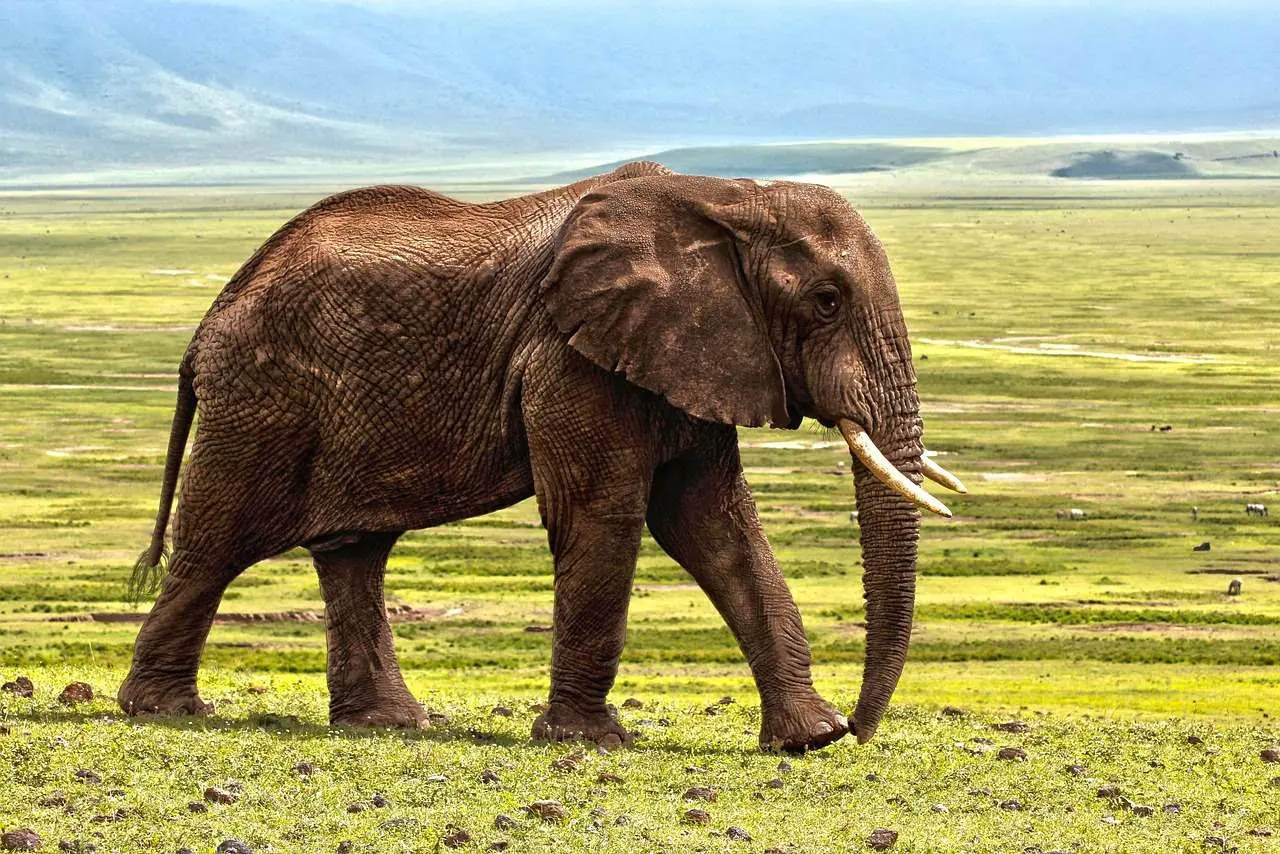
Once grass dominates, fire and big herbivores help keep it that way. Frequent fires and large grazing mammals kill seedlings, which holds the density of trees and shrubs low, and elephants in protected parkland can turn dense woodland into open grassland before annual fires lock the change in, as the UC Museum of Paleontology reports.
Soil can decide where trees stand at all. On hardpan, roots reach water only through cracks, and those cracks determine tree distribution, according to the Puget Sound Museum of Natural History. In parts of southwestern Kenya, Tanzania and Uganda, grouped-tree grassland has trees only on termite mounds, where the surrounding soil is too thin or poorly drained, notes the UC Museum of Paleontology.
Plants built for drought and fire
Grass is the backbone of the habitat. Tall grasses in the tropical savanna sometimes reach 3 meters, the Ohio University text says, and most of it is coarse and grows in tufts with bare ground between.
Which grass dominates depends on rainfall and soil. In drier East African savannas on well-drained soil, Rhodes grass and red oat grass lead, star grasses dominate across the region, and lemon grasses are common in western Uganda, the UC Museum of Paleontology reports.
Trees face the harsher test. The Puget Sound Museum of Natural History lists the main tricks:
- Long tap roots that reach the deep water table.
- Thick bark that resists annual fires.
- Seasonal leaf drop that saves moisture.
- Trunks that double as water stores, as in the baobab.
The umbrella-shaped acacia is the classic example, drawing water from deep below the surface with long roots, per the Ohio University text. Its thorns, and the stinging ants that live in them, ward off browsers, and only the giraffe tolerates its foliage.
Grasses protect themselves differently. Their deep roots survive when fire consumes the dry stems and leaves, and the same museum notes defenses against grazing such as silica-rich spicules and growth from the base of the plant instead of the tip, in the Puget Sound summary.
Animals, and where lions fit in
Plentiful grass supports plentiful grazers. The Puget Sound Museum of Natural History links the success of large herbivores to the huge biomass of grass produced each year, with many carnivores to crop them in turn. Open ground lets big animals move freely while woody cover still offers shelter, so large mammals reach their greatest variety here.
Dry seasons force movement. Competition for water becomes so intense that most birds and many of the large mammals migrate elsewhere, near or far depending on the drought, says the NCEAS Kids Do Ecology page.
Many species use the habitat in specialised ways:
- Termite mounds support specialists such as the aardvark and aardwolf in Africa.
- Birds of prey take advantage of wide open spaces for hunting and trees for perches.
- Birds gather at fires to eat the insects and small animals that flee or die.
- Giraffes use their long necks to browse high foliage in savanna woodland.
Those examples draw on the Puget Sound museum, the UC Museum of Paleontology and the Ohio University text.
Lions fit this setting well. The Puget Sound museum names them among savanna mammals with a high degree of sociality, a trait it links to food that is abundant but patchy, in its savanna profile. To see how the cats are spread across the map, read the guide on where do lions live.
Pressures on savanna land
The same grass that feeds wildlife also tempts people. The Puget Sound Museum of Natural History and the UC Museum of Paleontology point to several threats:
- Overgrazing, mainly by cattle and by goats in drier areas.
- Illegal hunting of large animals for meat and for salable parts such as tusks and horns.
- Clearing of land for crops.
Livestock compete with wild animals directly. Cattle grazing limits the food available for wildlife, and the NCEAS page adds that pasture for non-native cattle often damages the savanna itself.
Frequently asked questions
What does a savanna look like?
Show answer
Picture open grass with widely spaced trees, set in a climate where rain arrives in one long season and then stops.
Do wildfires wipe out savanna animals?
Show answer
Mostly not. Larger animals can usually outrun the flames, small creatures shelter in underground holes and crevices, and the animals that die are mainly short-lived insects, according to the UC Museum of Paleontology.
Why do savanna plants turn brown or drop their leaves?
Show answer
Shedding foliage cuts the water lost through leaves, and many grasses go dormant until the rains return, as the Ohio University text describes.
Which animals are typical of the savanna?
Show answer
Lions, zebras, elephants and giraffes are the standard examples named by the Ohio University text, and the exact mix changes from one continent to another.