If you’re curious about lions in the Serengeti, here’s the short answer: they live in big, flexible prides that split into small groups to hunt, then regroup. Where they roam depends on prey, season and people.
This page is one part of the wider guide to lion habitat.
| Item | Value |
|---|---|
| Largest prides | Some exceed 20 members |
| Radio-collar dataset behind a pride study | 12 years |
| Prides radio-tracked by the Lion Project | 24 prides |
| Camera-trap grid | 225 camera traps |
| Annual migration through the study area | 1.5 million wildebeest and zebra |
These figures come from University of Guelph research news and the Snapshot Serengeti project page. Numbers like these can change, so check the sources before you rely on them.
What the Serengeti plains offer lions
The Serengeti ecosystem lies in northwest Tanzania. A Scientific Reports study describes it as Serengeti National Park plus a surrounding network of game reserves and conservation areas, which together form a protected area complex.
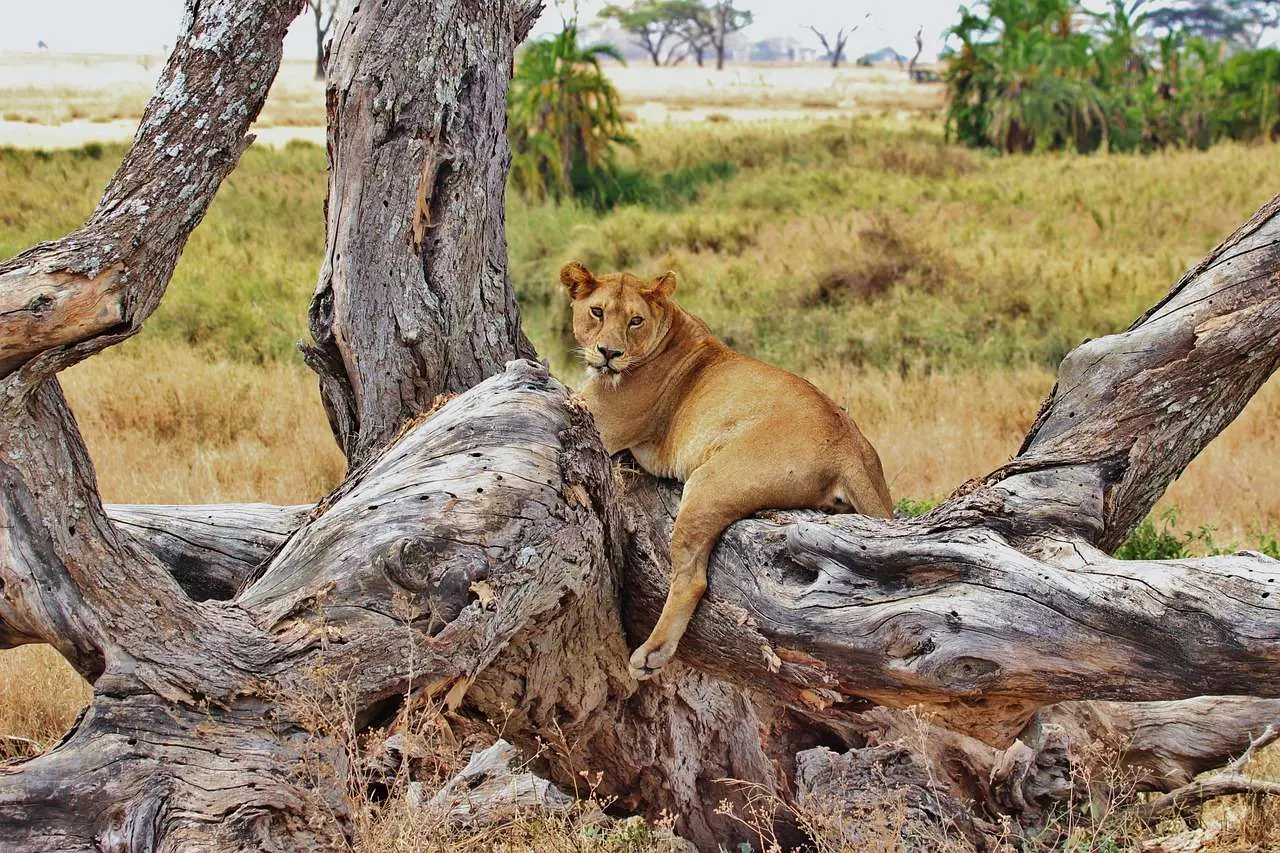
Not every corner is easy living. Smithsonian magazine described the Jua Kali pride’s range on the open plains as marginal habitat, with land the dull color of burlap and little shade or cover of any kind.
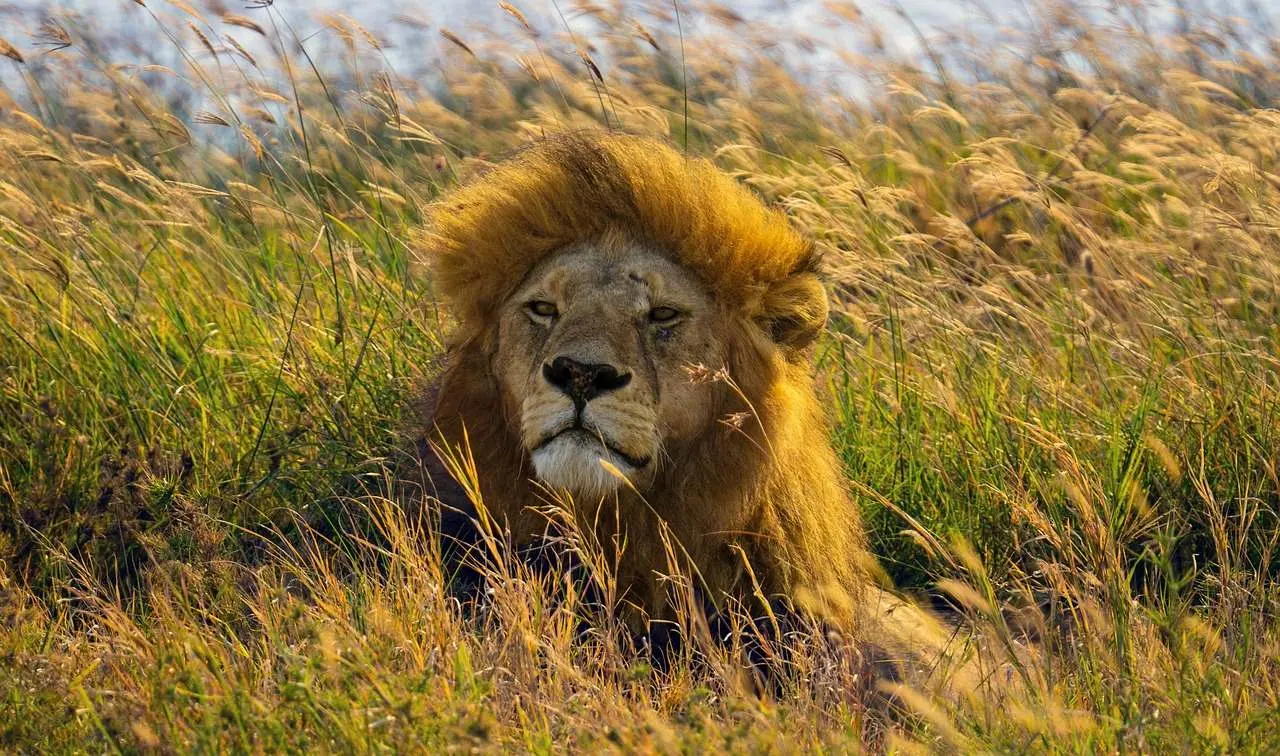
Prey is what keeps lions here. The Snapshot Serengeti team notes that the Serengeti supports sixteen species of hoofed herbivores, and that an annual migration of 1.5 million wildebeest and zebra passes through its study area.
How do Serengeti prides hunt and stay together?
Ecological theory says big carnivore groups should struggle, because group living often means each animal gets less food per kill. Yet University of Guelph reporting on a study in Ecology Letters says some Serengeti prides have more than 20 members.
The study, led by Dr. John Fryxell, used radio-collar data from female lions gathered over 12 years. The team modelled hunting efficiency using wildebeest as the model prey species.
The answer is a pattern called fission-fusion: large prides split temporarily into smaller subgroups to hunt more efficiently. The twist is that these small groups of hunters don’t usually work collaboratively.
Once fed, lions return to the main group. There, according to the same report, they gain:
- information sharing
- cooperative rearing of offspring
- group defence of their territory
The Guelph article adds that findings like this can help wildlife managers anticipate the outcomes of their interventions in an ecosystem facing many threats.
How far do lions roam across the seasons?
Pride ranges shift with season and habitat. A table hosted on PubMed Central gives the mean 75% home-range kernel area for prides in the Serengeti Lion Project study area, measured in the dry season of 2010 and the wet season of 2011:
- Dry season, grassland: 49.1 square kilometres
- Dry season, woodland: 46.6 square kilometres
- Wet season, grassland: 78.0 square kilometres
- Wet season, woodland: 51.6 square kilometres
Wet-season grassland ranges were the largest of the four. Treat the numbers as a snapshot of one dry and one wet season, not a fixed rule.
Protected land, people and lion numbers
The Scientific Reports study found that lions favoured strongly protected buffer areas over both the core park and unprotected land. When buffer areas had less protection, lions moved away from the boundaries toward the core protected area, per the paper’s abstract.
Season also shapes choices. The same abstract reports that lions avoided high livestock density in the wet season and high human density in the dry season.
The wider picture is sobering. As of Smithsonian magazine’s January 2010 report, Tanzania was home to as many as half of all wild lions, and its population had dropped by half since the mid-1990s to fewer than 10,000. The magazine tied the decline to people: farmers and ranchers pushing into lion country, and villagers who once shot only nuisance lions starting to use poisons against whole prides. That count is old, so look for newer estimates before quoting it.
If you want to see how these predators shape the rest of the savanna, read about the lion role in ecosystem.
How researchers track Serengeti lions
Few predators have been watched as closely. According to a Frontiers in Ecology and Evolution perspective, Craig Packer led the Serengeti Lion Project for nearly 40 years.
The Legends and Legacies of Africa profile calls it the longest continuous field study ever conducted on a large mammal. It says over 5,000 lions have been included in the Serengeti and Crater studies, with genealogical data extending over 12 generations.
The Snapshot Serengeti page describes how the work combines two tools:
- radio-tracking of 24 lion prides
- a grid of 225 camera traps
- photographs used to study how over 30 species are distributed across the landscape
If you’d rather watch lions yourself, the guide to the best places to see lions in the wild covers where to go.
Frequently asked questions
How much do Serengeti lions sleep?
Show answer
A lot. Smithsonian magazine describes lions as animals that slumber roughly 20 hours a day, so patient watching is part of the research job.
How big do male lions get?
Show answer
The same magazine feature says male African lions can be ten feet long and weigh 400 pounds or more. Those are the upper limits, not the average.
Who started the long-term lion study?
Show answer
George Schaller launched the Serengeti Lion Project in 1966, working with binoculars, field notebooks and a Land Rover, as Craig Packer recounts in Frontiers in Ecology and Evolution.
Why do lions live in prides at all?
Show answer
Researchers once assumed hunting was the reason. Packer and his collaborators concluded that a pride isn’t formed primarily for catching dinner, sharing parenting chores or cuddling, and they point to rival lions as the force that shapes lion society, according to Smithsonian magazine.