Planning a trip and worried about picking the wrong park? The best places to see lions in the wild are the few big strongholds: Serengeti/Mara, Okavango/Chobe, Tanzania’s large reserves, Kruger and India’s Gir.
This guide sits inside our wider look at lion habitat, which explains the landscapes lions depend on.
| Item | Value |
|---|---|
| Lions in eastern and southern Africa (LionAid estimate, May 2025) | 13,014 lions |
| Lions in western and central Africa (same estimate) | 342 lions |
| African lion populations estimated at over 1,000 lions | Five populations |
| Lions in Mozambique’s Niassa Reserve, 2014 | 1,235 lions |
| Lions in India’s Gir National Park, 2014 | 306 lions |
| Lions in Gir’s surrounding satellite areas, 2014 | 179 lions |
These figures come from LionAid’s May 2025 synthesis and the CITES-CMS supplementary Red List data. They are estimates that can change, so check the sources before you rely on them.
Africa’s biggest lion strongholds
As of LionAid’s May 2025 report, only five lion populations in Africa are estimated at over 1,000 lions. That short list is the natural starting point for any trip, and LionAid names them:
- Okavango/Chobe in Botswana
- Serengeti/Mara, which spans Kenya and Tanzania
- Selous/Nyerere in Tanzania
- Rungwa/Ruaha in Tanzania
- Kruger in South Africa
Beyond that list, the CITES-CMS dataset shows Niassa Reserve in Mozambique rising from 339 lions in 1993 to 1,235 lions in 2014. The dataset treats it as an outlier and keeps it out of its regional totals.
If you want the wider country-by-country picture, read where do lions live before you choose a destination.
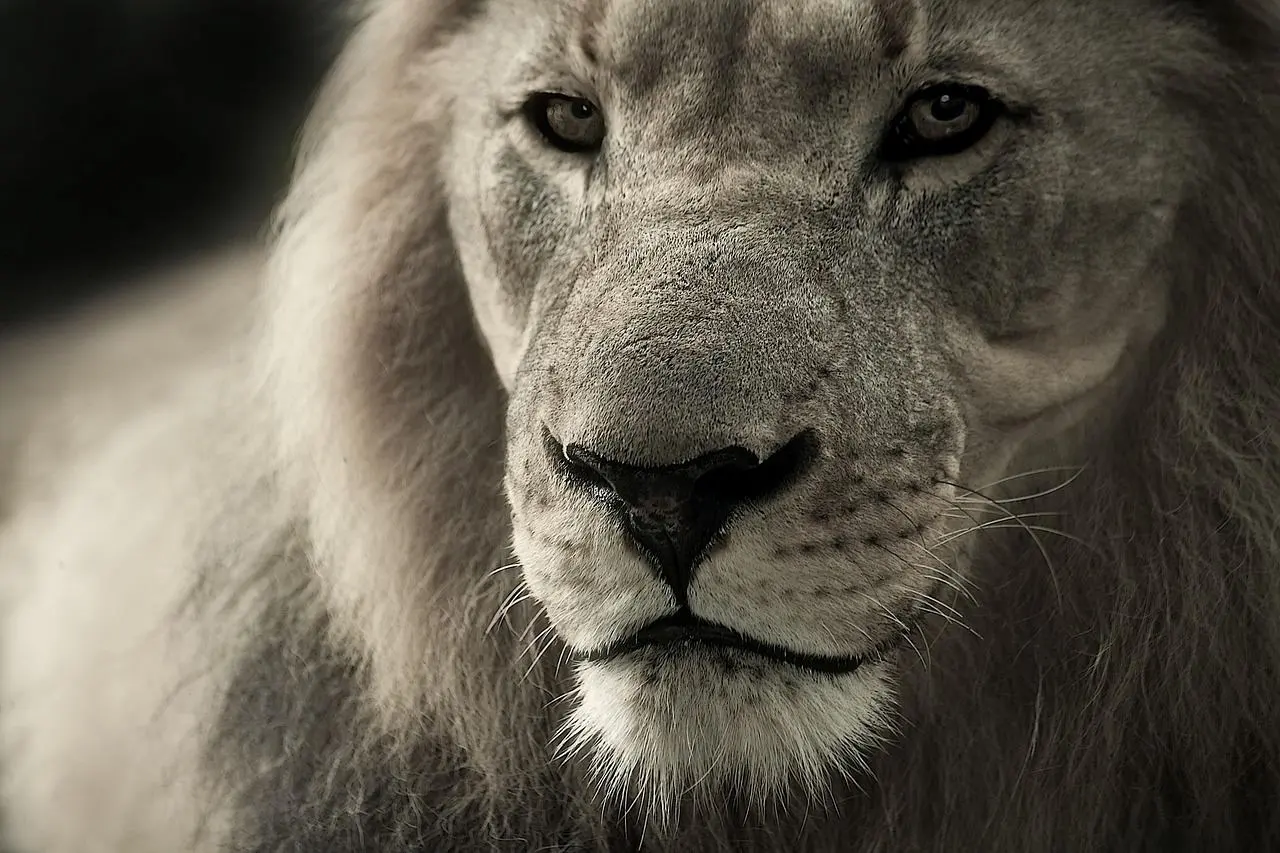
Best places to see lions: why do the counts differ?
LionAid reports that most lion estimates are still based on guesses, and that some surveys include cubs while others do not. Its 2025 compilation also says very few counts are scientifically rigorous.
The spread shows in the headline totals. National Geographic’s July 2019 report cited fewer than an estimated 25,000 lions in Africa and said lions have vanished from 94 percent of their historic range.
A Smithsonian Books essay by Pieter Kat estimates perhaps around 10,000 lions remaining in Africa in 2020. He calls that a better figure than the IUCN’s estimate of maybe 20,000 lions, which he says is skewed by lions in fenced private parks in South Africa.
As of LionAid’s May 2025 report, the IUCN still lists the lion as vulnerable, a status LionAid argues understates the danger. For your planning, the lesson is simple: use counts to see where lions persist, not to promise a sighting.
Where lion numbers are rising and falling
The CITES-CMS data follows 47 monitored subpopulations from 1993 to 2014. Grouped by region, the sampled lions moved in very different directions.
| Region | Change in sampled lions, 1993-2014 |
|---|---|
| Asia (India) | +55% |
| Southern Africa | +8% |
| Eastern Africa | -59% |
| West and Central Africa | -66% |
The percentages come from the CITES-CMS supplementary data, which warns that sampled sites do not necessarily represent a whole country. Figures can change, so check the source before you rely on them.
A 2015 PNAS study reached a similar pattern across 47 lion populations: declining everywhere except in four southern countries, namely Botswana, Namibia, South Africa and Zimbabwe. For a traveller, that means southern Africa holds the steadiest trend, while East Africa’s famous savannas are under pressure.
Fenced reserves and reintroduced lions
Much of southern Africa’s success comes from fenced reserves. The CITES-CMS data lists 16 fenced subpopulations in four countries:
- South Africa: Hluhluwe iMfolozi, Kgalagadi, Kruger, Kwandwe, Madikwe, Makalali, Phinda, Pilanesberg, Tembe and Welgevonden
- Namibia: Etosha and Ongava
- Zimbabwe: Bubye Valley, Malilangwe and Save Valley
- Kenya: Ol Pejeta
The PNAS authors credit part of the southern success to reintroduced lions in small, fenced, intensively managed and funded reserves. Reintroductions have also reached Rwanda and Malawi, though LionAid notes such populations are heavily managed behind fences.
Kat adds that the IUCN’s southern African trend is hard to verify, because the count rests on South African lions mostly living behind fences. Whether a managed reserve feels wild enough is your call.
Lions also shape the land around them, and the PNAS authors warn that their loss means a major trophic downgrading of African ecosystems. Our page on the lion role in ecosystem explains why that matters.
Seeing lions in India’s Gir
Lions are not only African. Kat notes that Indian lions have subspecies status distinct from African lions, so a trip to India means a different animal.
The CITES-CMS data tracks Gir National Park and its surrounding satellite areas from 1993 to 2014. Inside the park, lions rose from 276 to 306, while the satellite areas climbed from 36 to 179 lions.
That growth is why Asia shows the best trend in the regional table above. The numbers are small beside Africa’s strongholds, though, so the dataset is a useful snapshot rather than a guide to sightings.
Planning around the numbers
Use the figures above as a filter, then decide how much risk and distance you accept. A short routine helps:
- Pick one of the five African strongholds if you want the largest populations.
- Choose a southern African fenced reserve if you value stability over open wilderness.
- Treat every count as an estimate, since methods differ between surveys.
- Re-check the source dates before you rely on any number.
Funding shapes whether these places last. A 2018 study co-authored by Peter Lindsey found that securing lions in Africa’s protected areas needs more than one billion dollars annually, while National Geographic’s July 2019 report put current spending at only about $381 million a year.
Frequently asked questions
Which park has the most lions?
Show answer
The sources do not rank the five largest populations against each other, so no single park can be named as the leader.
Can you see wild lions outside Africa?
Show answer
Yes. The CITES-CMS dataset covers one Asian site group, Gir and its satellite areas in India, where counts grew between 1993 and 2014 according to the CITES-CMS figures.
Are lions in West Africa worth looking for?
Show answer
Very few remain: LionAid’s estimate fell from 410 to 342 for western and central Africa. Kat also doubts that the cross-border population in Benin, Burkina Faso and Niger is still viable after civil strife and meat poaching.
Do lions in fenced reserves count as wild?
Show answer
They roam freely inside the boundary, yet their numbers are tightly managed by people. Many travellers accept that trade-off for a steadier population; others prefer unfenced ground.