Wondering where lions can actually live? In short, lion habitat is a patchwork of African protected areas plus one dry forest in India. Lions hold only a small share of their historical range.
| Item | Value |
|---|---|
| Extant lion range (2025 estimate) | 566,675 km2, or 6.13% of the historical range |
| Overall range decline, 2004 to 2025 | 34% |
| Lions in Africa (2025 estimate) | 22,000 to 25,000 adult and subadult lions |
| Lion density in Africa | 1.5 to 55 per 100 km² |
| Gir Forest area (Asia’s only lion habitat) | 1,400 km² |
| Gir lion population (2020) | About 670 adult and subadult lions |
These figures come from the IUCN Cat Specialist Group’s lion page. Estimates are revised as new surveys arrive, so check the source before you rely on them.
What counts as lion habitat?
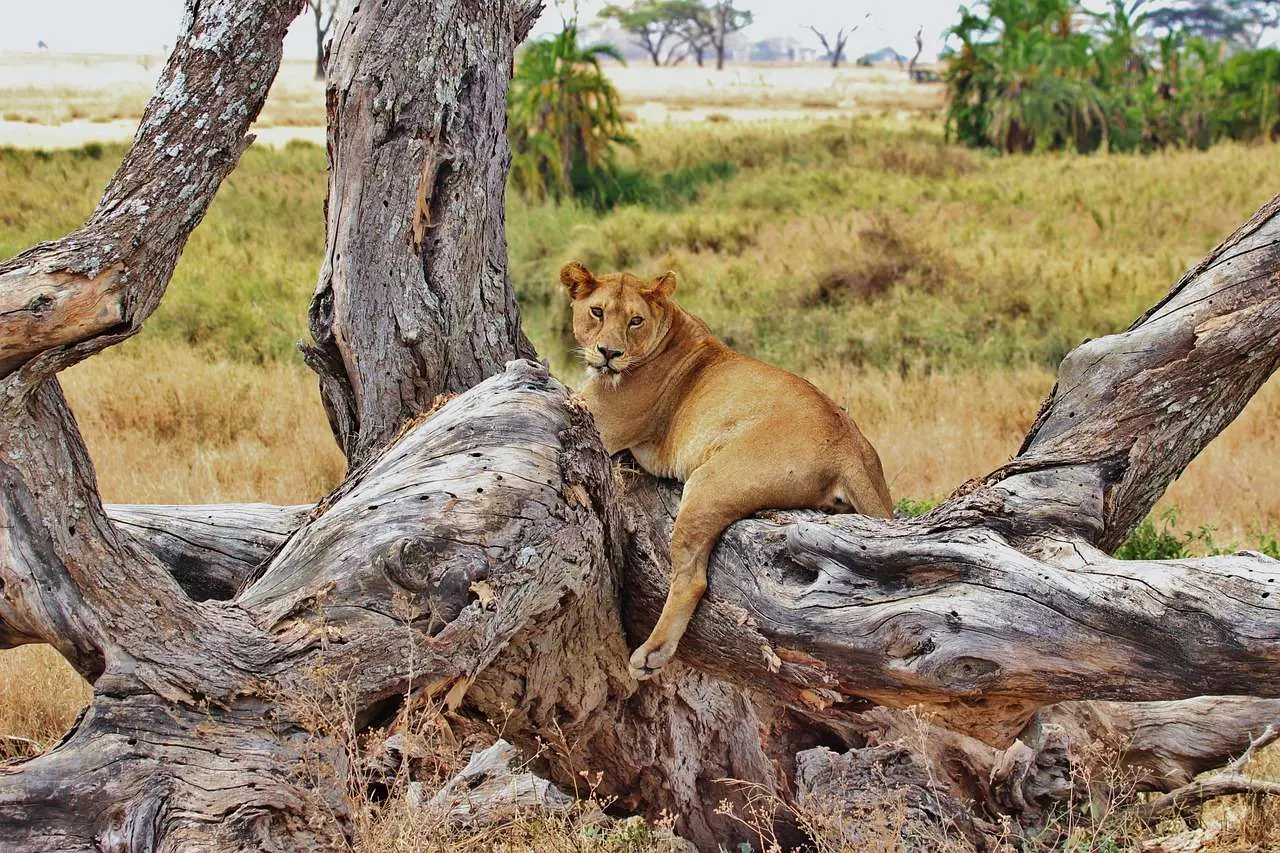
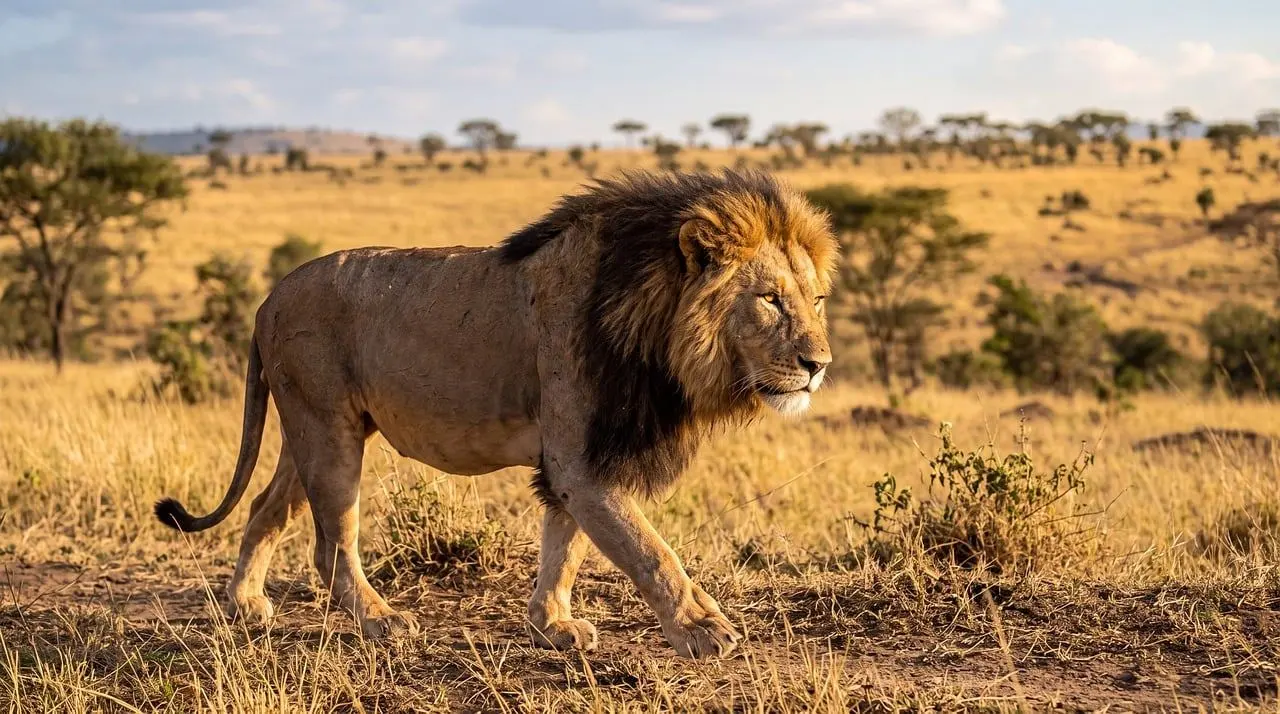
Put simply, lion habitat is land where lions can find prey and avoid deadly conflict with people. The tawny coat is a clue to the classic picture: it blends into the grass cover of the savanna, as the IUCN Cat Specialist Group describes it.
Savanna is not the whole story, though. Our guide to savanna habitat covers that grassland world in detail, while lions in India live in forest.
Lions also cope with very different climates. Male manes range from quite sparsely furred in hot and humid areas to very impressive in milder climates, according to the Cat Specialist Group. The wider story of how the body fits the land is told in our guide to lion adaptations.
Geography also splits the species in two. According to ZSL, there are two subspecies: the Northern lion (Panthera leo leo) and the Southern lion (Panthera leo melanochaita). The Cat Specialist Group places the first in Central and West Africa and India, and the second in Southern and Eastern Africa.
The same group describes the Northern subspecies as formerly present throughout:
- North Africa
- South-east Europe
- The Middle East and the Arabian Peninsula
- South-west Asia
How lions use and share the space they still have is explored in our guide to lion behavior.
Where lions live in Africa today
Lions have lost most of their ground. The IUCN Cat Specialist Group estimated the extant range at 566,675 km2 in 2025, which is 6.13% of the historical range.
From 2004 to 2025 the overall range decline was estimated at 34%, with a suspected population reduction of the same size, according to the same page. It assumes the main declines have taken place in West and Central Africa.
That page puts the African population at roughly 22,000 to 25,000 adult and subadult lions in 2025, with density ranging from 1.5 to 55 per 100 km². Lions are difficult to survey, so knowledge of their numbers and distribution is limited. Density gives a hint about how much room lions need, which the lion territory size guide explores further.
If you want a country-by-country answer, the guide on where do lions live is the place to start. Regions differ sharply:
- Southern Africa: lions partly occur in fenced reserves, and populations there are increasing or stable, according to the Cat Specialist Group.
- Central, East and West Africa: the IUCN’s supplementary data show an overall decline of 62% between 1993 and 2014 across 23 unfenced subpopulations from 11 countries.
- West Africa: all seven subpopulations are considered isolated from one another. Several parks hold less than 50 individuals, and the largest population, an estimated 187 lions, lives in the W-Arly-Penjari Complex, per the Cat Specialist Group.
According to that page, which carries 2025 range estimates, the lion is listed as Least Concern in South Africa but as Critically Endangered in West Africa, where it remains only in small numbers in a few areas. Read the source for the exact wording.
Gir Forest: the one place lions live in Asia
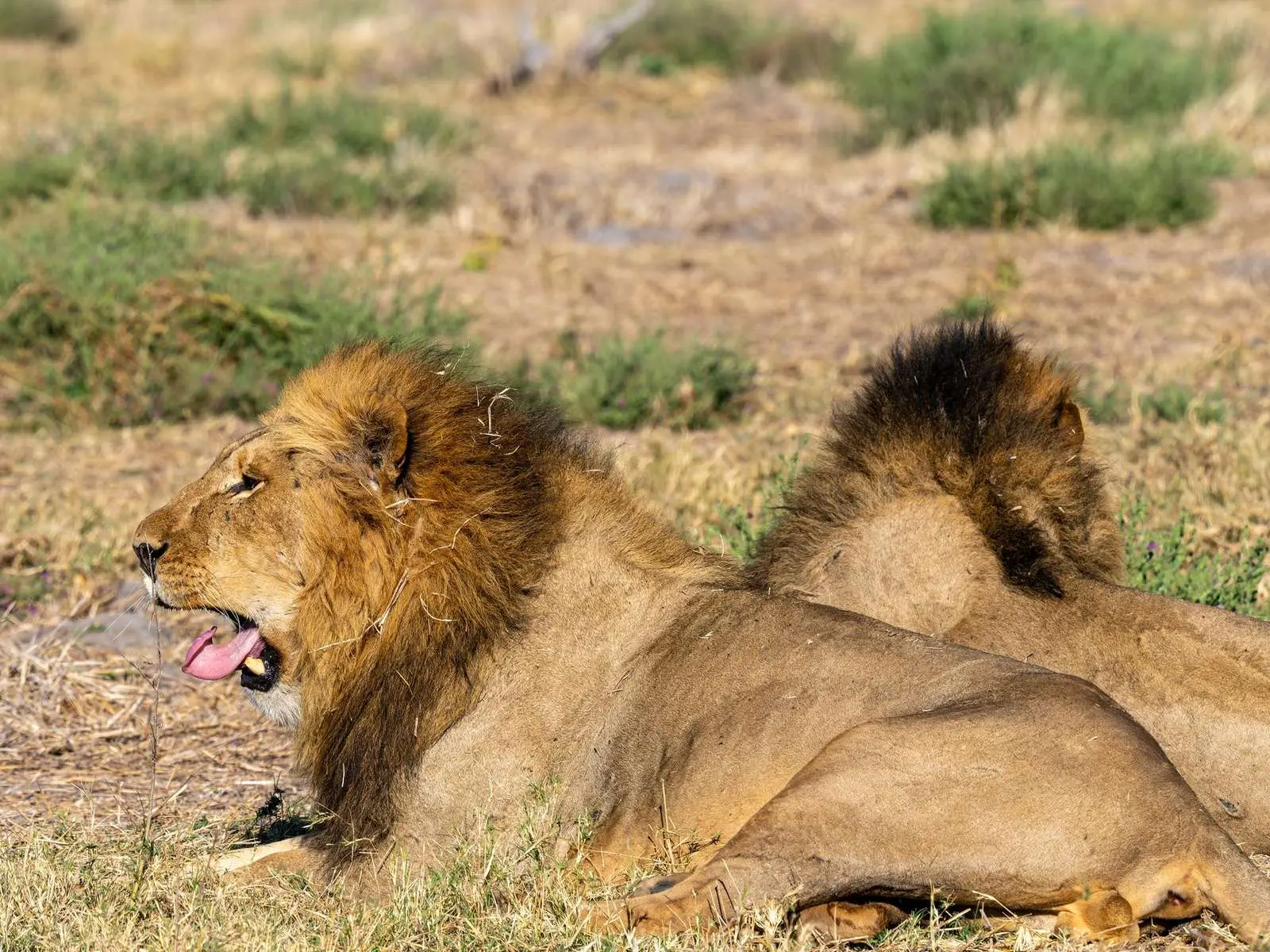
As of the Cat Specialist Group’s page, which carries 2025 range data, lions in Asia remain only in India. They form a single isolated subpopulation in the 1,400 km² Gir Forest National Park and Wildlife Sanctuary and the surrounding landscape, as the IUCN Cat Specialist Group reports.
The habitat is dry deciduous forest, according to Britannica. PBS describes the Gir as a mix of deciduous forest, thorn forest and savannah. Our gir forest lions guide follows this population in more depth.
If you picture dense jungle, the guide on do lions live in the jungle gives the longer answer.
The population has made a dramatic comeback. The Cat Specialist Group says it was estimated at around 12 animals in 1880, increased steadily from 1968 onwards, and reached about 670 adult and subadult lions in 2020.
Britannica says these lions once ranged from Turkey to India, and that around 500 to 700 wild Asiatic lions remain in the Gir forest. A census taken in 2015 counted 523 lions, according to a PBS fact sheet dated April 2016.
That same fact sheet reports that the Indian government declared the Gir forest a wildlife sanctuary in 1965. Beginning in 1972, human activity was prohibited inside the park. The protection history matters because the Gir was once reduced to a last refuge.
Success has a side effect. The PBS sheet says as much as 40 percent of the population lived outside the park bounds in satellite groups, where the big cats face greater risk of death or injury from conflict with people, cars or trains.
Lions share the Gir with other large carnivores, according to PBS:
- Leopards
- Spotted hyenas
- Honey badgers
- Golden jackals
Britannica describes Gir lions as apex predators that hunt at night, preying on mammals such as chital, antelope, and wild boar.
Why lion habitat keeps shrinking
As of the IUCN’s 2016 assessment, the lion is Vulnerable. The assessment inferred a reduction of approximately 43% over 21 years, from 1993 to 2014.
That headline hides a split. The same assessment observed sample subpopulations rising by 12% in four southern African countries and in India, while sample subpopulations elsewhere in Africa fell by 60% (IUCN).
The assessment names these as the most important causes of decline:
- Indiscriminate killing in defence of human life and livestock
- Habitat loss
- Prey base depletion
The ZSL summary adds large-scale habitat conversion and retaliatory killing after human-lion conflict, real or perceived.
The IUCN data also record that lions were recently extirpated in 12 African countries, with possible extirpation suspected in another four (IUCN). Throughout most of Africa, lions are becoming increasingly rare outside protected areas, says the Cat Specialist Group.
Fenced reserves tell a different story. The IUCN’s supplementary data chart growth since 1993 in 16 fenced subpopulations from four countries. The assessment says subpopulations appear stable where management is properly funded, with fencing one of several effective techniques.
Money is the sticking point. Many subpopulations occur where management budgets are low, leading to local decline and even extinction, for example in West Africa, according to the same IUCN assessment.
What these changes mean for other species is covered in our guide to the lion role in ecosystem. Efforts to reverse the losses are set out in our overview of lion conservation.
Seeing lions in their habitat
Because lions are becoming increasingly rare outside protected areas, as the Cat Specialist Group notes, a wild sighting usually means visiting one. The best places to see lions in the wild guide is independent and carries no paid placements.
Knowing the habitat helps you set expectations. In a savanna park you would scan open grass where the tawny coat blends in, while in the Gir you would be looking through dry deciduous forest.
Frequently asked questions
Do lions live anywhere outside Africa?
Show answer
Yes, but only in India. As of the IUCN’s 2016 assessment, the sole remaining Asian group survives in the Gir Forest area of Gujarat, as the assessment states.
Which part of Africa is worst off for lions?
Show answer
West and Central Africa. The Cat Specialist Group calls the situation there the most alarming, and it flags knowledge gaps in Angola, Central African Republic, Democratic Republic of Congo, Nigeria, Somalia and South Sudan.
Is the Asiatic lion still endangered?
Show answer
Britannica reports that the IUCN used to list Asiatic lions as endangered but revised the status to vulnerable in 2024.
Why do lion numbers differ between sources?
Show answer
Lions are hard to survey, so counts and range maps carry real uncertainty. Early estimates leaned on scientific surveys, expert opinion and best guesses, which is why figures vary from one source to the next (Cat Specialist Group).