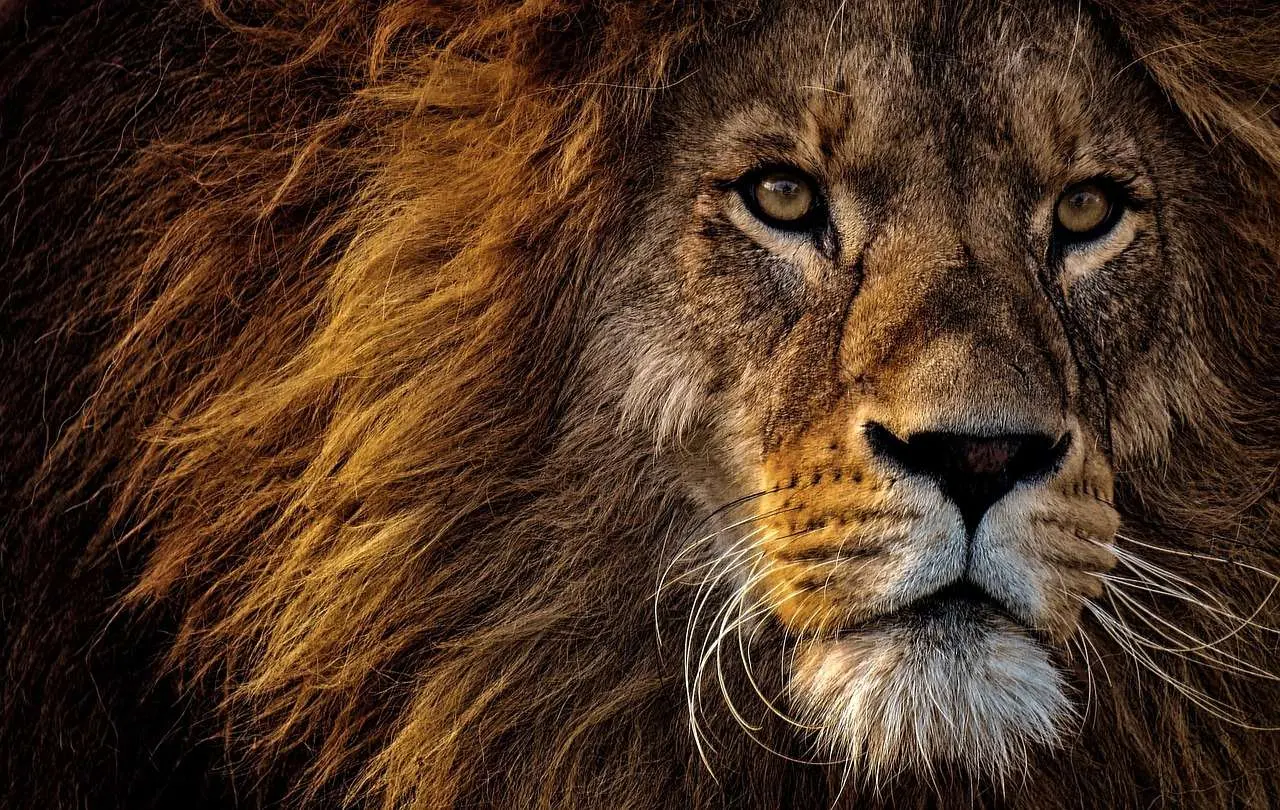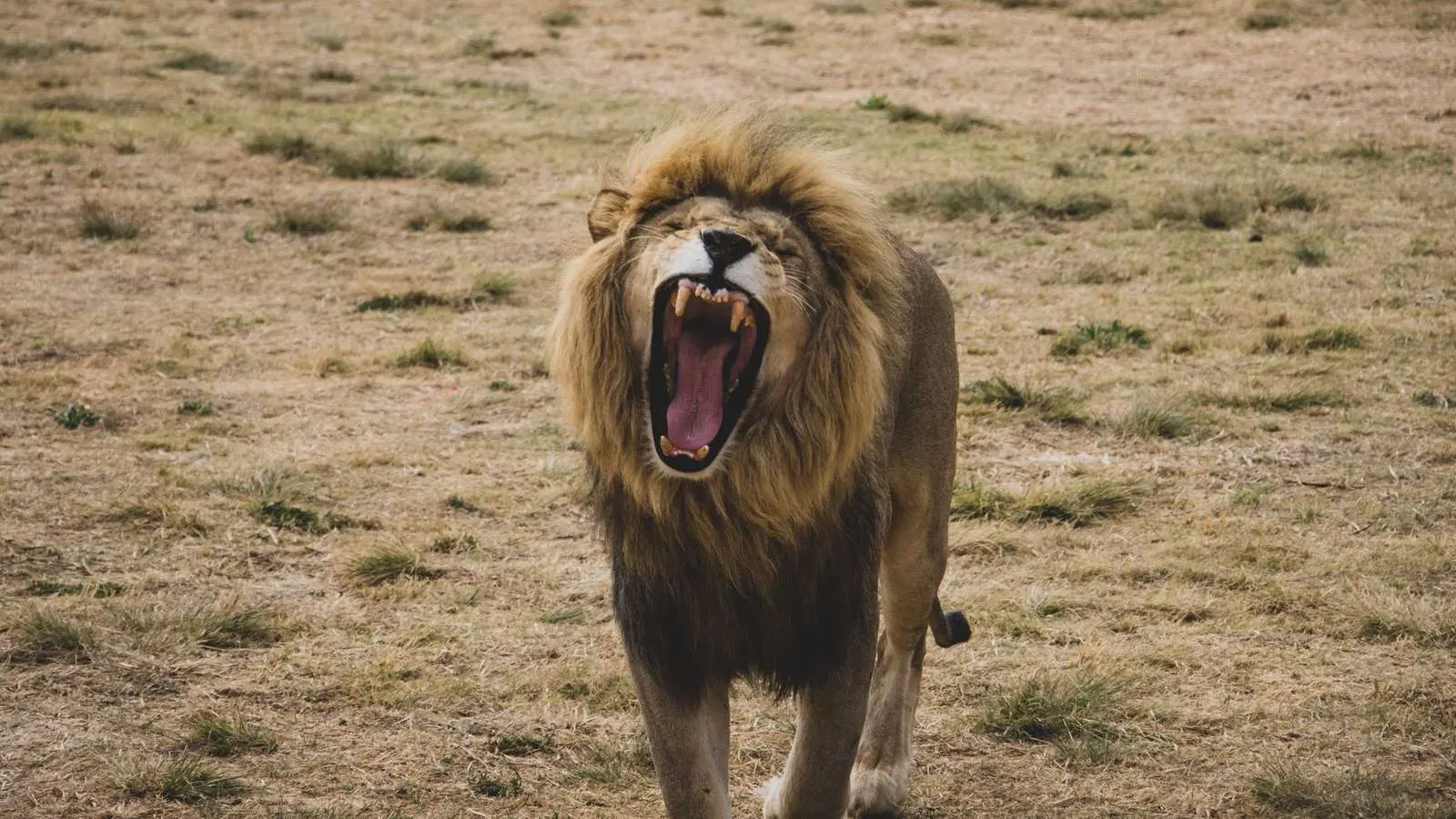
You have probably wondered: why do lions roar? They roar to advertise territory, stay in touch with pride members and warn rivals. Recent research shows the sound is more complex than it seems.
This guide is part of our look at lion behavior, from vocal signals to everyday habits.
| Item | Value |
|---|---|
| Distance a roar carries | Up to 5 miles (8.0 kilometers) in human hearing |
| Roar types identified | 2 types (full-throated and intermediary) |
| Calls analyzed in the new study | More than 3,000 calls |
| Classification accuracy | Over 91 percent in at least one population |
| Historic range lions have vanished from | More than 90 percent |
Figures come from Science News and Wikipedia’s entry on roars. They can change as new studies appear, so check the source before you rely on them.
What a lion’s roar is for
A roar works as a loud message that travels across the landscape. Biologists have long known that it helps advertise territory, attract mates and locate pride members, as Science News reports.
Both sexes use it. Wikipedia’s roar entry says the call helps with social spacing and territorial defense, warding off lions that might wander into another lion’s territory by mistake.
A 2007 study recorded 18 male and 6 female lions in Serengeti National Park, Tanzania. Differences between the sexes were entirely explained by body size. The authors found no evidence that the sound reflected male condition.
That result suggests sexual selection may be only a weak force shaping the roar. The same paper proposes that roars were mainly selected to advertise territorial boundaries.
How a roaring bout is built
A lion does not usually fire off one isolated sound. A complete roaring bout begins with moans and ends with grunts, according to Science News.
Until recently, everything between those two ends was treated as a single roar. Researchers now split that middle section into two types:
- The full-throated roar is the familiar, guttural call that anchors the bout and carries a vocal signature unique to each animal.
- The intermediary roar is shorter and lower-pitched than the classic version.
In the recordings, full-throated roars traced a clear arc, rising in pitch before a trailing fall. Intermediary roars were flatter and far less elaborate, Science News notes.

Can roars help count lions?
Researchers reported the second roar type on November 20, 2025 in the journal Ecology and Evolution. The team ran more than 3,000 calls through pattern-recognition software, as Science News describes. The audio came from remote recorders in Tanzania’s Nyerere National Park and collars fitted to lions in Zimbabwe.
The resulting algorithm sorted roars, moans and grunts with high precision, topping 91 percent accuracy in at least one lion population. Fed the full-throated calls, it could also tell individual lions apart.
That matters because lions have vanished from more than 90 percent of their historic range, per the same Science News report. With individual voices identified by software, conservation groups may be able to count and track lions by sound alone.
One big question remains open. Because the recordings lacked behavioral context, scientists cannot yet say why lions choose one roar type over the other, and what the intermediary roar actually communicates remains unclear, Science News reports.
How lions produce such a loud sound
Roaring depends on body structure as much as effort. According to Wikipedia’s roar entry, several features stand out:
- The hyoid bone of the big cats is less ossified and more flexible than in other cats.
- The snow leopard shares that flexible hyoid but cannot roar, because its shorter vocal folds offer little resistance to airflow.
- Roaring animals may stretch out their necks and raise their heads to create more space for resonance.
In short, a roar is not just a louder meow. It is a different vocal mechanism built into the throat.
How roaring fits into pride life
Roaring is a social signal as well as a territorial one. Because lions of both sexes roar, as Wikipedia notes, the call can carry a pride’s presence across open ground. The social side makes more sense once you know lion pride structure, including who lives together in a group.
A roar is also only one part of a lion’s routine. The guide on how long do lions sleep covers the long rest periods that surround these loud moments.
Frequently asked questions
How far can a lion’s roar be heard?
Show answer
Human ears can pick one up from as far as 5 miles away, and lions probably hear it from farther, according to Wikipedia’s entry on roars.
Do female lions roar too?
Show answer
Yes. Lionesses roar as well as males, and the 2007 Serengeti recordings included 6 females alongside 18 males, as the University of Minnesota listing shows.
Can researchers recognize a lion by its roar?
Show answer
Largely, yes. The software did better than human experts at picking out which lion was calling once it isolated the full-throated roar, as Science News explains.
Is the famous movie-studio lion roar real?
Show answer
Not entirely. Wikipedia says the Metro-Goldwyn-Mayer logo’s roar was recreated from tiger growls instead of actual lion roars.