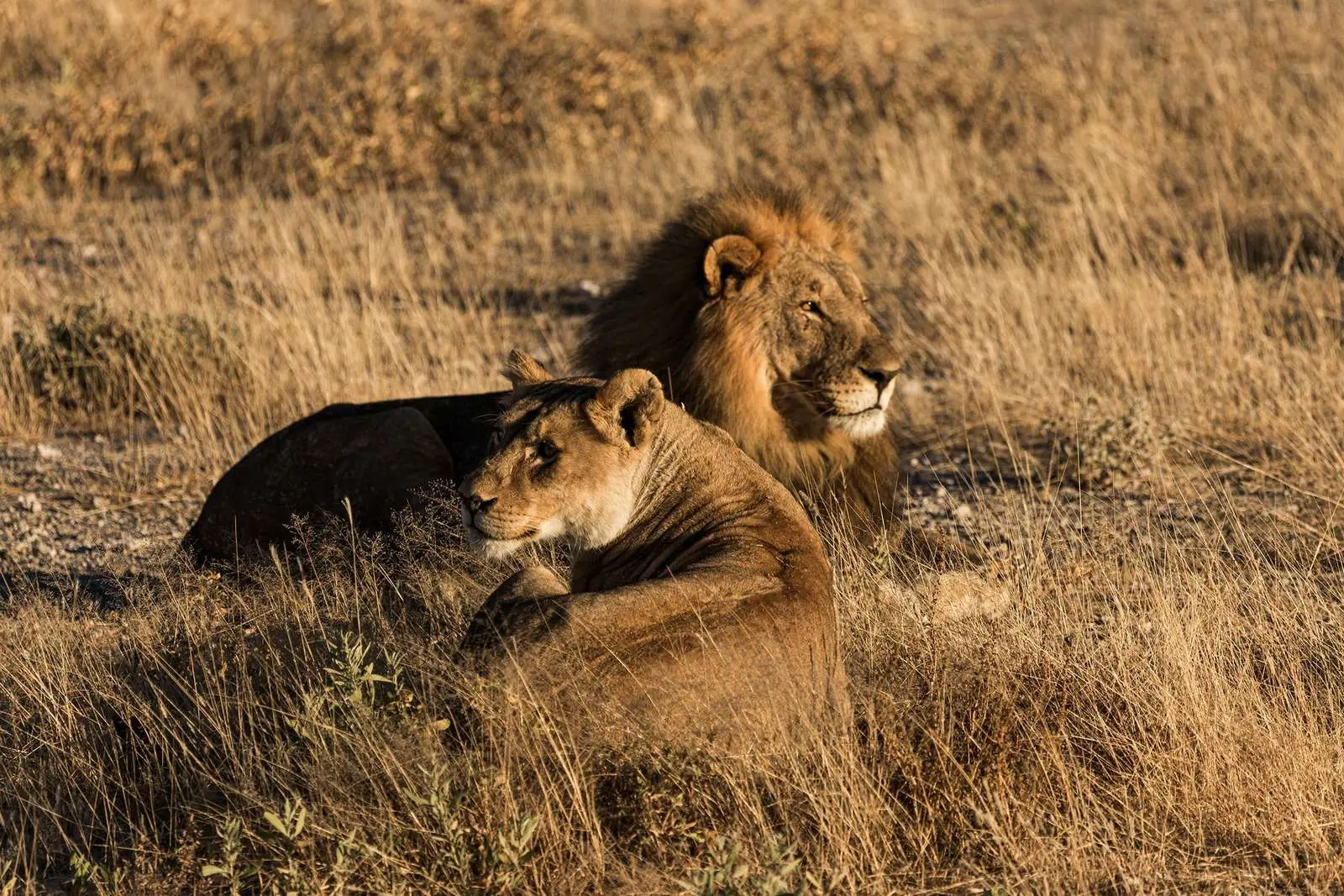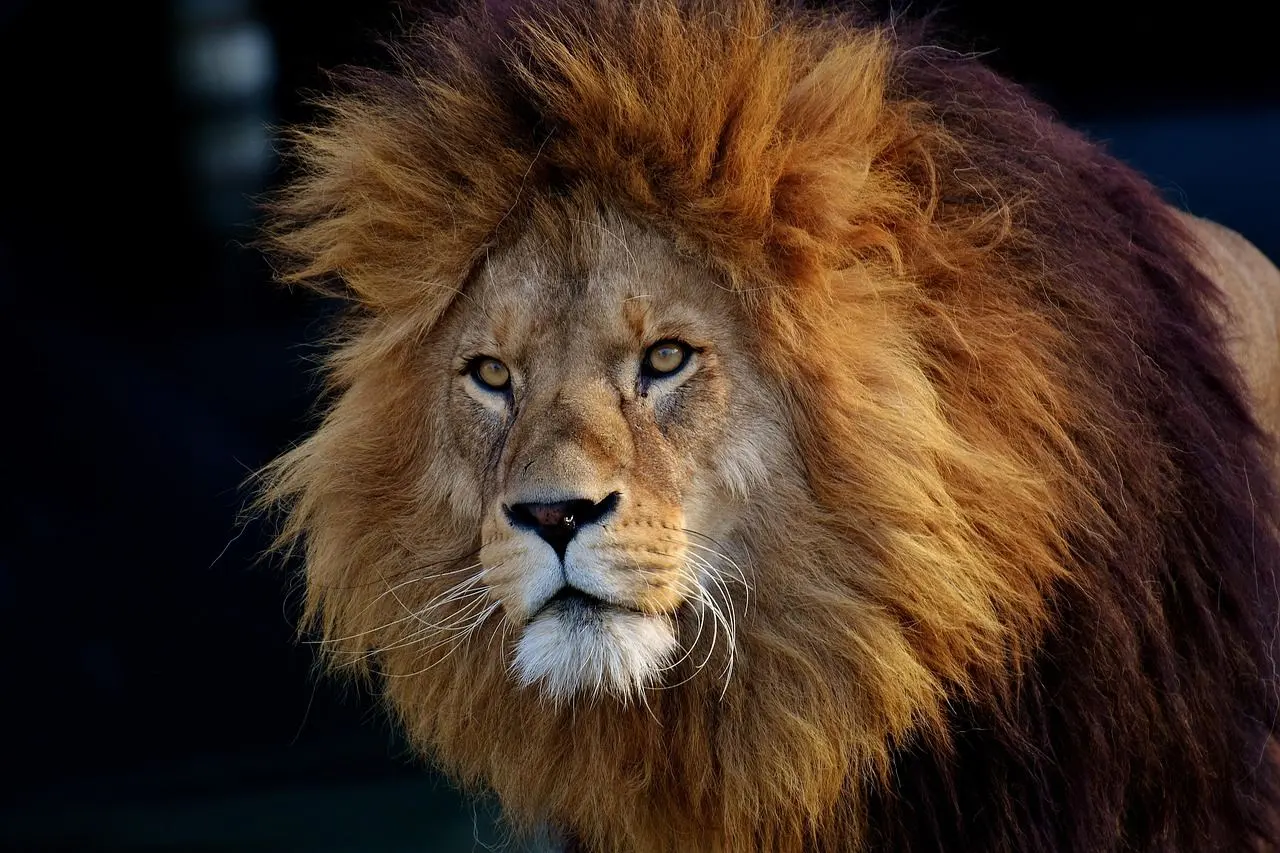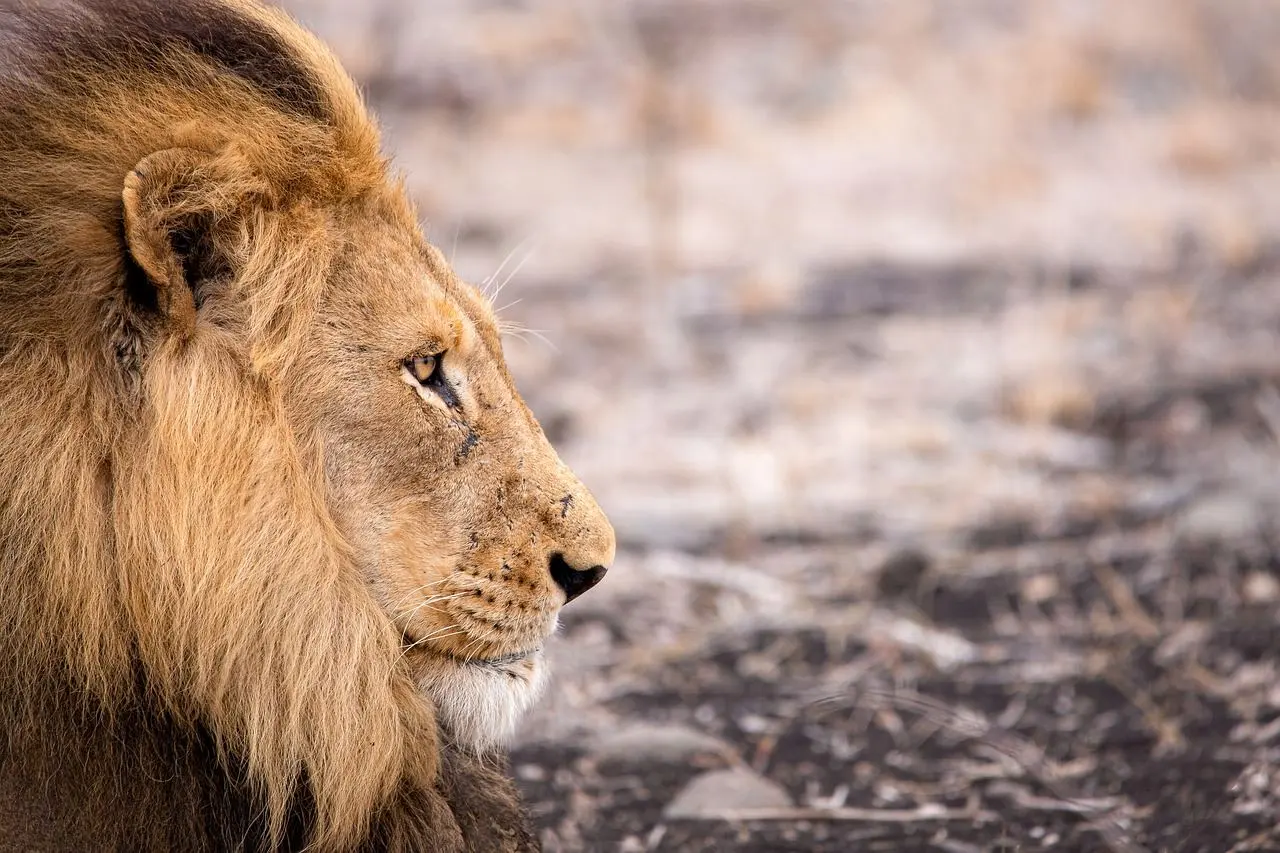
Wondering how many lions are left in the wild? About 23,000 wild lions roam Africa, and 891 Asiatic lions live in India’s Gujarat. Those counts are estimates, so read them as a range.
For the wider picture of threats and recovery work, see our guide to lion conservation.
| Item | Value |
|---|---|
| Wild lions in Africa | about 23,000 wild lions |
| Asiatic lions in India (Gujarat) | 891 Asiatic lions in 2025 |
| Share of historical range still occupied, 2025 | 6.13% |
| Range decline, 2004 to 2025 | 34% |
| Largest national population (Tanzania) | around 8,000 lions |
| IUCN Red List status (2023 assessment) | Vulnerable |
The figures come from the Anadolu Agency World Lion Day factbox and the Convention on Migratory Species summary of the IUCN assessment. They can change as new surveys arrive, so check the sources before you rely on them.
How many lions are left in Africa and India?
The best available estimate is about 23,000 wild lions in Africa. The Lion Recovery Fund bases that figure on data compiled in the IUCN Cat Specialist Group’s African Lion Database, according to the Anadolu Agency factbox.
Other organisations land in the same place. WWF says there are around 23,000 African lions left in the wild, and the CMS summary cites about 23,000 adult and subadult lions in Africa for the 2023 IUCN assessment.
The IUCN Cat Specialist Group offers a range rather than a single number: between 22,000 and 25,000 adult and subadult lions in 2025. It stresses that only a small proportion of lion range has been systematically surveyed, as Anadolu Agency reports.
In India, the Gujarat government counted 891 Asiatic lions in 2025, as Anadolu Agency reports.
Why the lion count is only an estimate
Africa has no single continentwide census, unlike India with its coordinated count. National figures blend camera-trap surveys, sightings, tracking data, population models and expert assessments from different countries and years, according to Anadolu Agency.
Methods also differ in what they count. Some totals include cubs, while others cover only adults and older juveniles, so two national numbers may not be comparable.
The CMS summary flags extensive caveats and enormous uncertainty in the IUCN figures, which were partly based on differing methodologies.
That is why an earlier estimate of about 35,000 lions in 2013 cannot simply be subtracted from today’s figure. Differences in survey coverage and methodology get in the way, per the factbox.
Where the biggest lion populations live
Lions are spread unevenly. Tanzania is widely regarded as the stronghold, with around 8,000 lions, and other large populations sit across southern and eastern Africa (Anadolu Agency).
| Country or area | Estimated lions |
|---|---|
| Tanzania | around 8,000 lions |
| South Africa | 3,490 free-roaming lions |
| Botswana | around 2,800 lions |
| Kenya | 2,589 lions (2021 national wildlife census) |
| W-Arly-Pendjari complex (Benin, Burkina Faso, Niger) | about 187 lions |
These estimates come from the Anadolu Agency factbox, which credits the South African National Biodiversity Institute for the South Africa figure. Many South African lions live in fenced and intensively managed areas, while West Africa’s largest population is tiny by comparison. Check the source before you rely on these numbers, because they can change.
How far lion numbers and range have fallen
The IUCN Cat Specialist Group estimates that lion range shrank by 34% between 2004 and 2025, a span of about three lion generations. It suspects the population fell by a similar share, with the heaviest losses in West and Central Africa (Anadolu Agency).
In 2025 lions occupied an estimated 566,675 square kilometers, which is just 6.13% of their historical range. They have disappeared from at least 16 African countries, including Egypt, Morocco and Algeria, according to the same factbox.
The 2023 IUCN assessment, summarised by CMS, measured the trend differently. It found a 36 per cent range decline since 2002, and an estimate that slid from about 33,000 lions in 2006 to about 23,000 adult and subadult lions.
Even so, CMS calls those numbers consistent with the range loss, although they cannot be turned into an exact population trend.
What is driving the decline?
Most threats trace back to people sharing space with lions. The Anadolu Agency factbox lists these main pressures:
- Habitat loss and fragmentation as farmland, settlements, roads and other infrastructure expand into lion territory.
- Loss of wild prey to poaching and the bushmeat trade, which can push lions toward livestock.
- Retaliatory killing by shooting, spearing or poisoning after livestock attacks.
- Wire snares set for other animals.
- Targeted poaching for body parts.
- Poorly monitored or unsustainable trophy hunting in some areas.
- Disease, civil unrest and armed conflict that make protected areas harder to manage.
National Geographic calls the role of trophy hunting controversial. Mismanaged hunting in the past has caused lions to disappear from some habitats, while hunters and those involved in the industry say hunting fees generate money for lion conservation.
Conservation groups say survival depends on more than protected areas. They point to securing wildlife corridors, restoring prey populations and helping communities protect their livestock while benefiting from living alongside lions.
Where lions are recovering and what their status means
Not every trend points down: Gujarat’s total grew from 674 Asiatic lions in 2020. Because all of them live in a single landscape, disease or extreme weather could hit the whole population, and growth brings more contact with people and livestock (Anadolu Agency).
Senegal’s Niokolo-Koba National Park saw its lions recover from fewer than 10 animals to nearly 40 after more protection, and lions have been reintroduced in Rwanda, Malawi and Zambia. Botswana moved the other way, with its estimated population declining by about 20% from approximately 3,500 in 2015 to 2,800, according to the same factbox.
As of the 2023 IUCN assessment summarised by CMS, the lion is listed as Vulnerable. The assessors recommend treating it as a species under observation, with a reassessment after a minimum three-year period.
Our separate page on the question are lions endangered goes into what each Red List label means. If you want to act on these numbers, our guide on how to help save lions is a practical next step.
Frequently asked questions
Are wild lions in danger of dying out?
Show answer
The risk is real. WWF notes that a vulnerable listing means a high risk of extinction in the wild, and it ties lion decline to human-wildlife conflict, falling prey and habitat loss.
How many lions lived in Africa in the past?
Show answer
Panthera’s fact sheet says more than 200,000 wild lions lived in Africa over a century ago. It also cites a drop from approximately 90,000 to about 24,000 across the last fifty years, though it gives no date for that estimate (Panthera).
Do wild lions live outside Africa?
Show answer
Yes, but in one place only. The Anadolu Agency factbox reports that outside Africa, wild lions survive only in the Indian state of Gujarat.
Do lions bring in money from tourism?
Show answer
They can. WWF estimates that in Uganda each lion generates approximately £14,000 annually, which is one reason protecting lion landscapes also supports national economies.